


Porta WPC a basso contenuto di saturazione Grigio-Brown - G002


Dettagli
SUPERUS coordina porte personalizzate, pannelli a parete e armadi in una lingua spaziale.
Combinazioni, finiture, dimensioni e requisiti funzionali sono confermati in base a ogni progetto.
Caratteristiche principali:
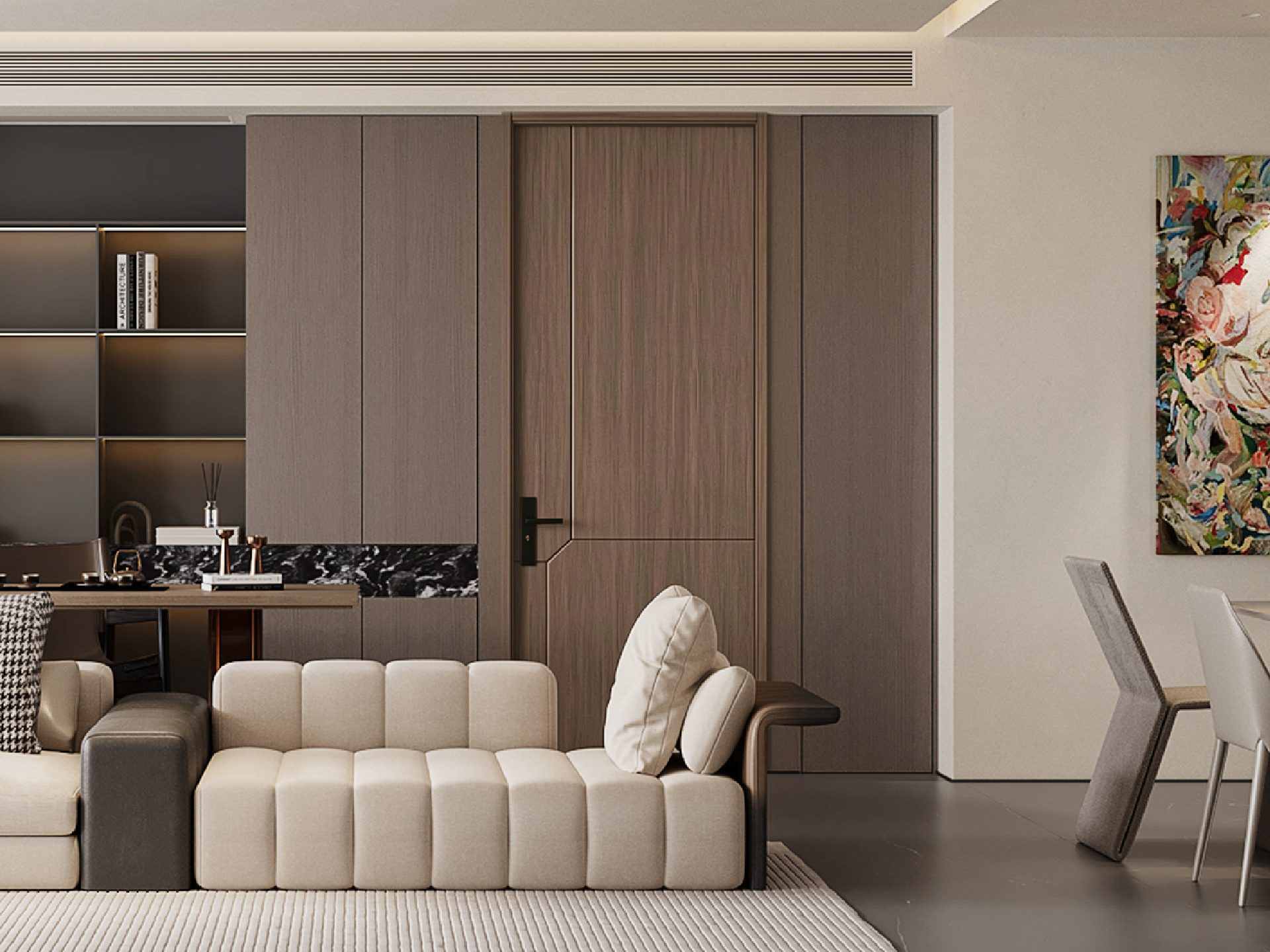
Rivestito in granulo grigio-marrone a bassa saturazione, fine e morbido, tra grigio e marrone. Rimane una lastra piana minimalista, senza linee di telaio e senza divisioni, lasciando che il grano riempia tranquillamente la superficie; una leva divisa opaco-nero siede a un lato, l'unico punto fresco sul viso.
Estruso in un passaggio dalla farina di legno e fibra vegetale con resina PVC, il colore scorre attraverso un corpo omogeneo senza impiallacciatura superficiale. Questo composito in legno-plastico WPC è impermeabile e resistente all'umidità, resistente alla termite, resistente allo stampo e resistente alla verruca, senza che gli insetti della cellulosa si nutrano, cucina, bagni, balconi e climi umidi. B1-classe ignifugo e autoestinguente, è privo di vernice, E1-completa, bassa formaldeide, bassa VOC e riciclabile.
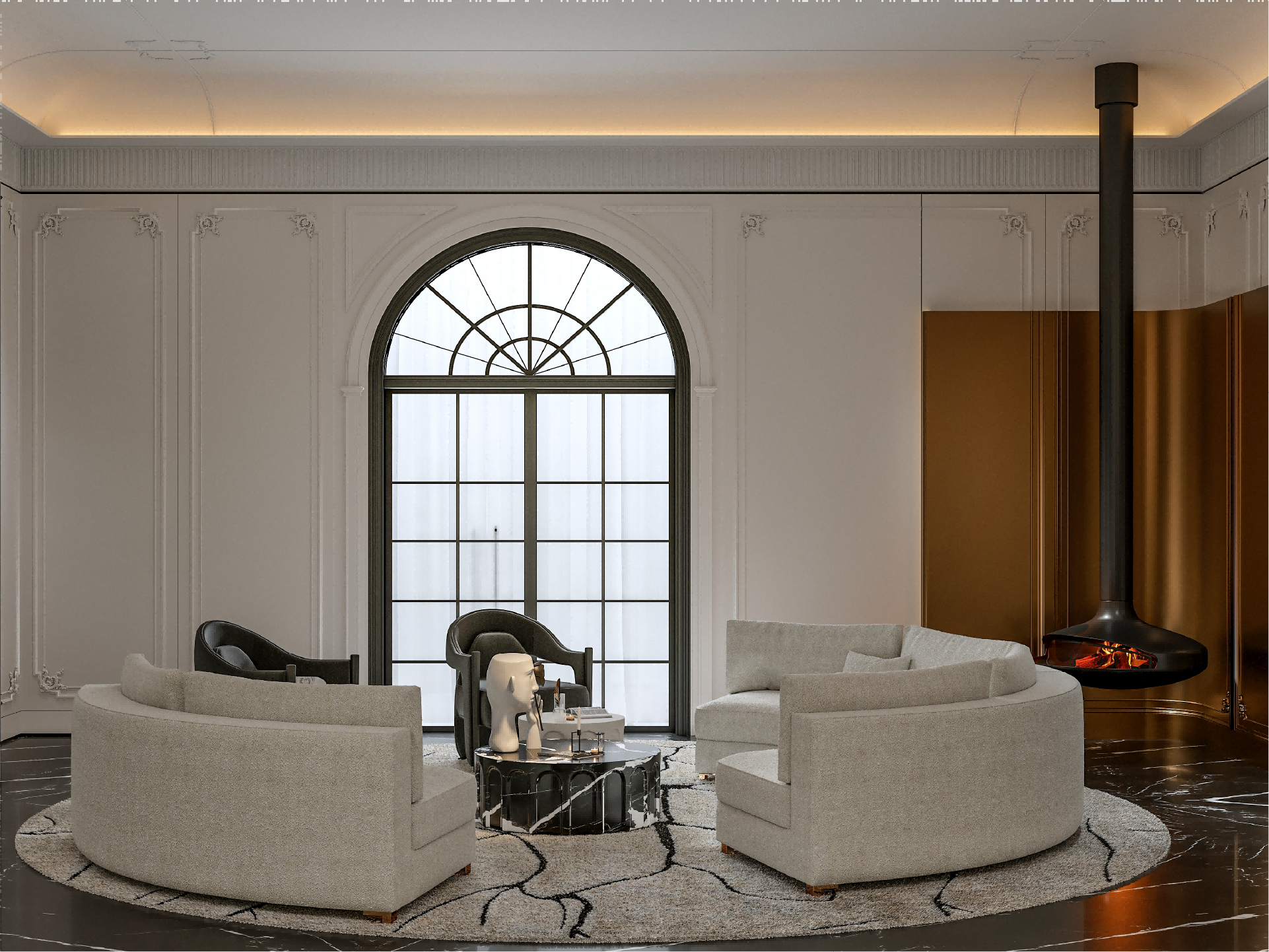
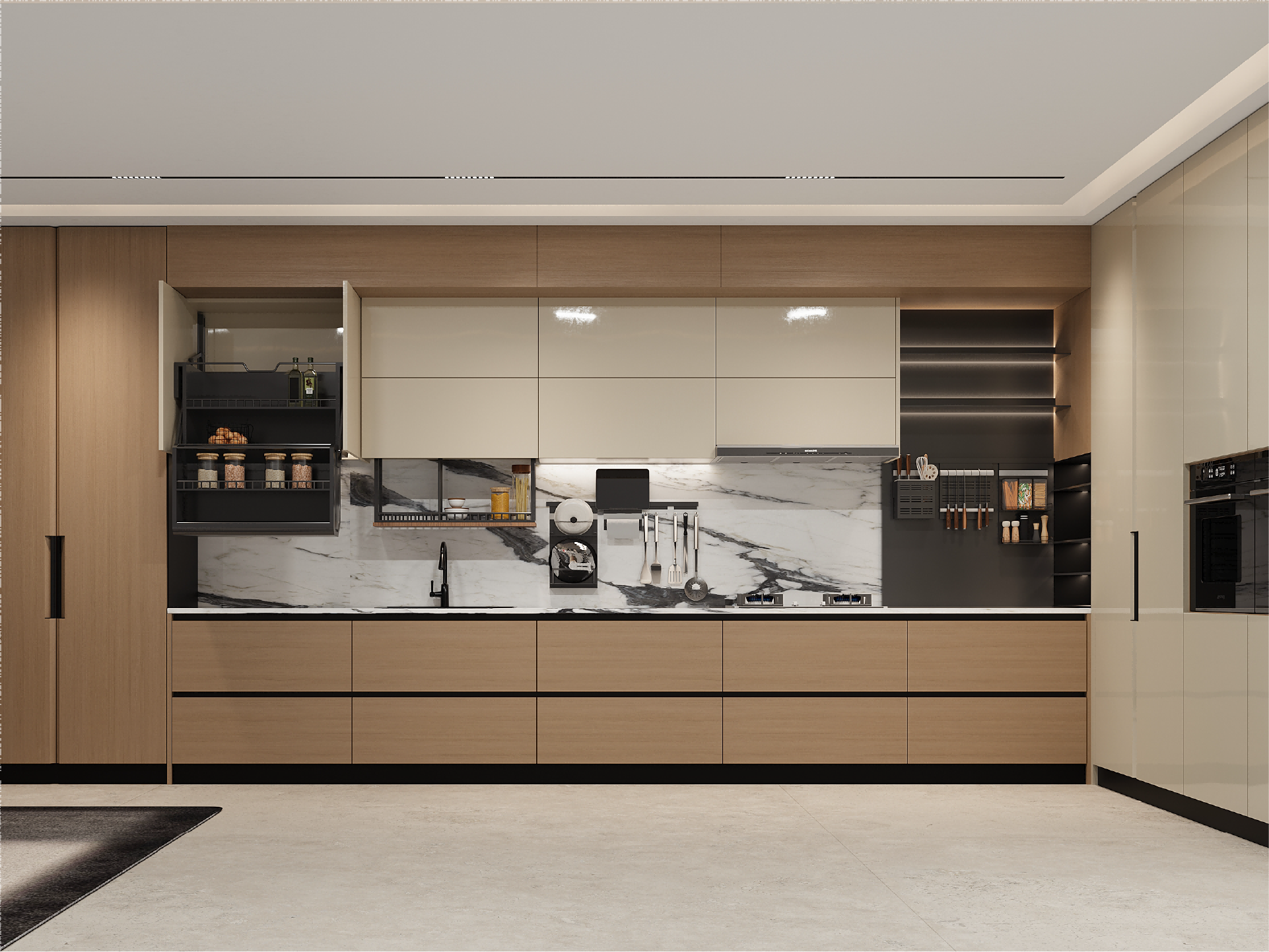
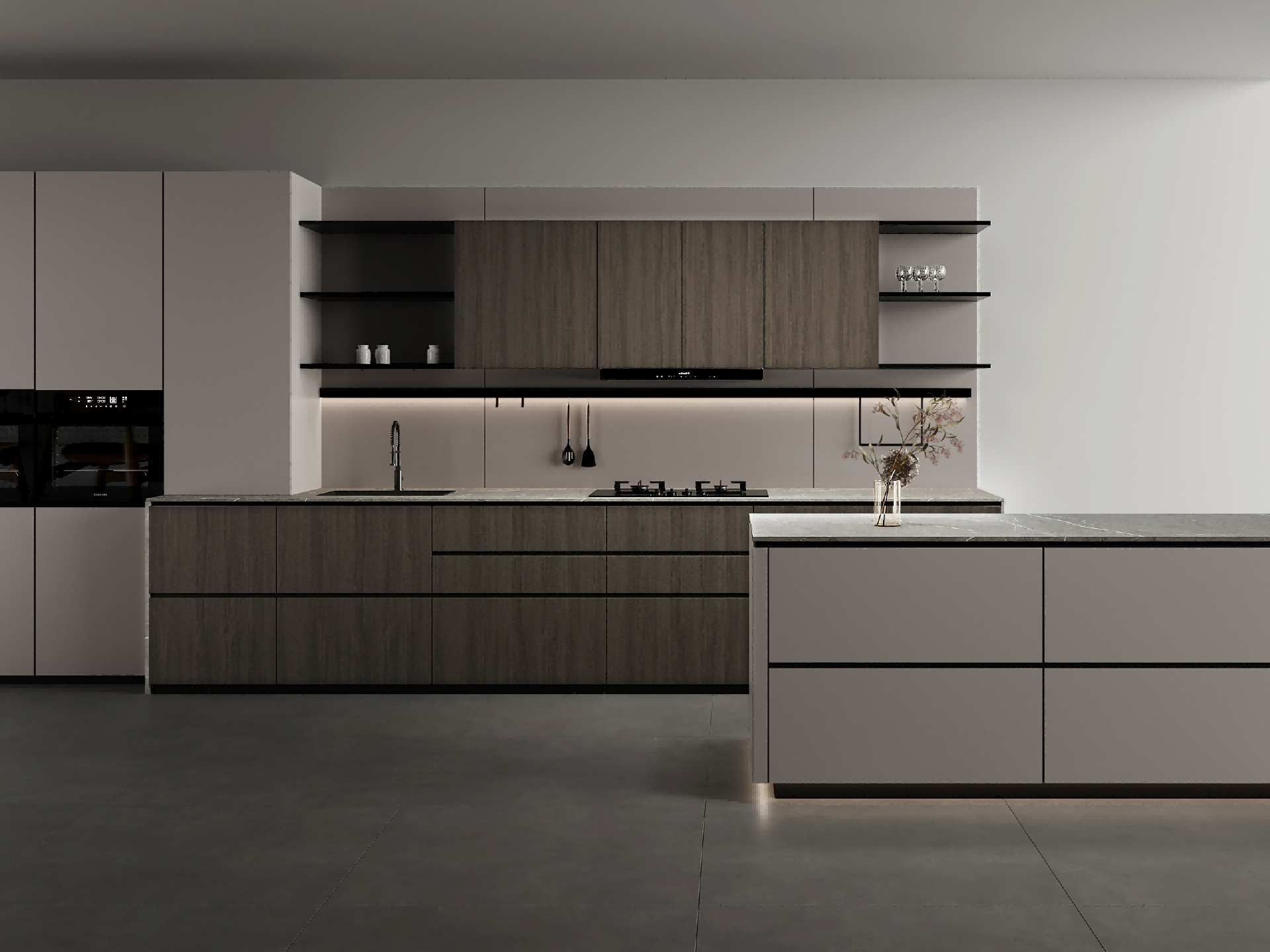
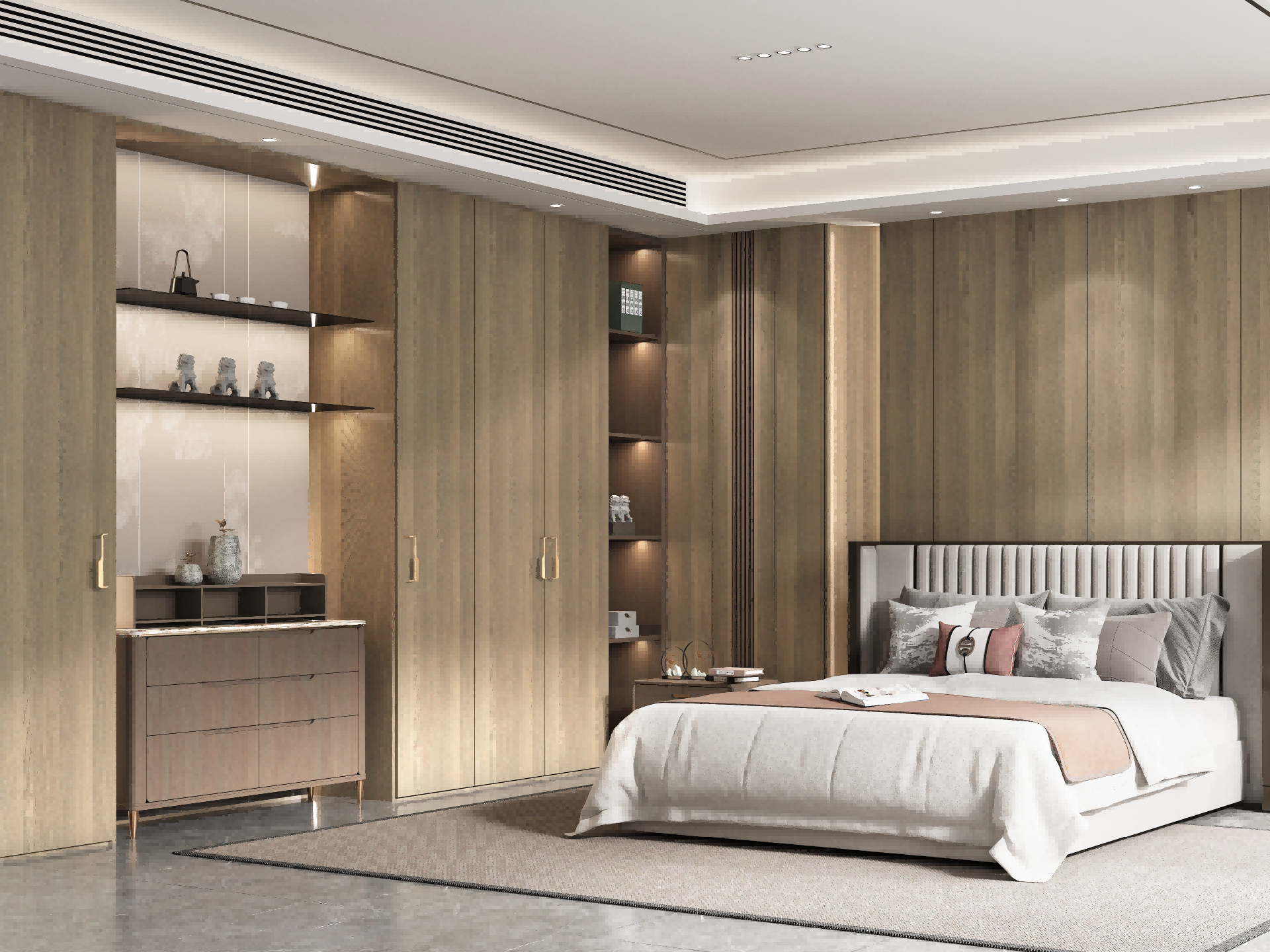
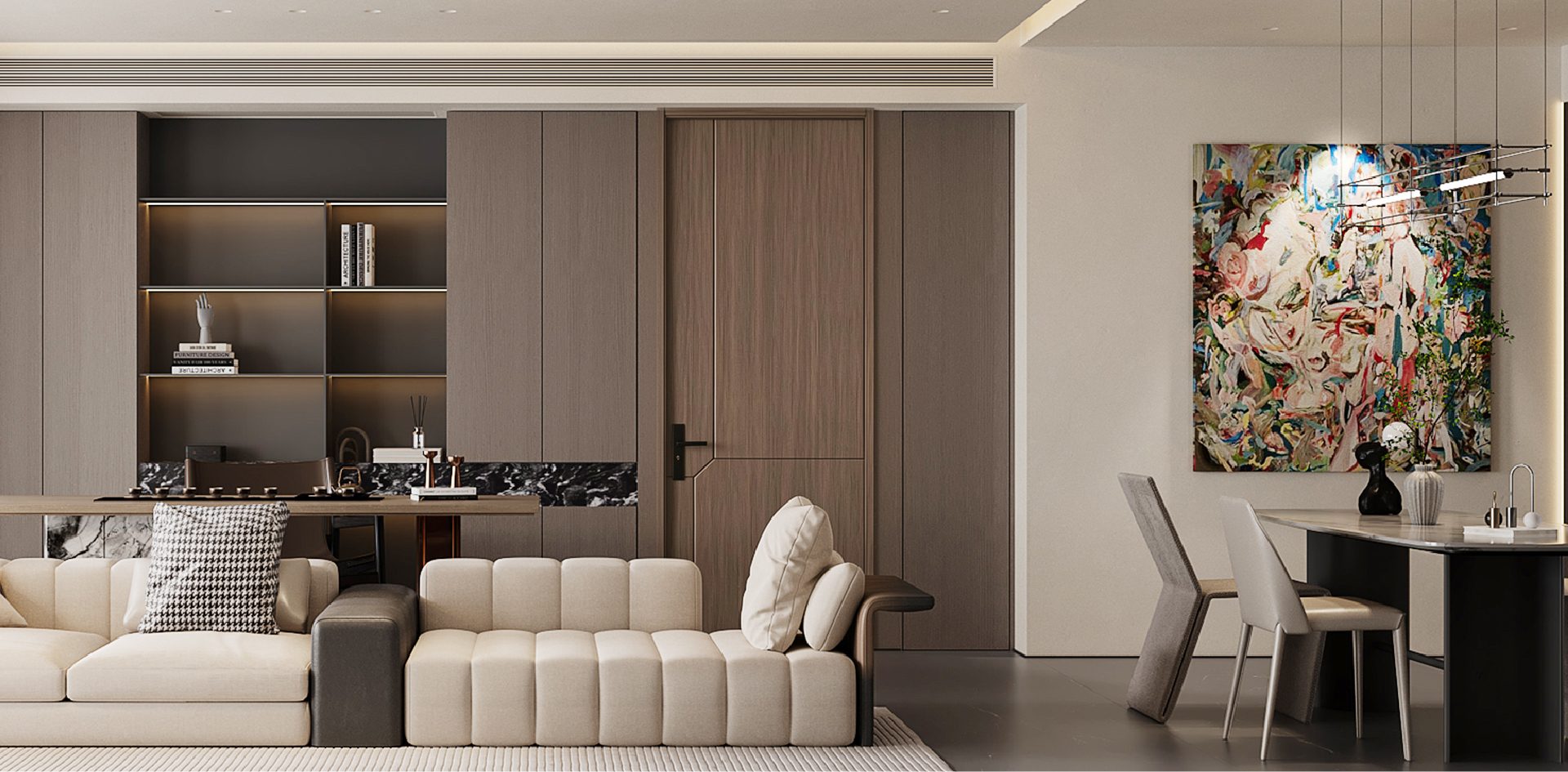
In un moderno salotto minimalista o camera da letto, il grano grigio-marrone si siede facilmente accanto ai divani crema e ai tavoli da pranzo scuri, e tornando a casa lascia svanire la giornata. Un panno umido lo pulisce pulito, e rimane piatto attraverso stagioni umide e secche. Si accoppia con pareti e tessuti bianchi.
Domande frequenti
What is the difference between solid wood, engineered wood and WPC interior doors?
Solid wood doors use natural timber (oak, ash, walnut) and give the richest grain, but they move most with humidity. Engineered doors bond a stable core (LVL, finger-joint or solid-core board) with veneer or laminate, so they resist warping far better. WPC (wood-plastic composite) is fully waterproof, termite-proof and needs almost no maintenance, which is why it now dominates bathrooms, kitchens and tropical projects.
Do solid wood doors warp or swell in humid tropical climates?
Any timber absorbs moisture, so a door can cup, swell or bind when indoor relative humidity swings. The risk is controlled three ways: kiln-drying to 8–12% moisture content, balanced construction (equal veneer or laminate on both faces, engineered core), and complete six-sided sealing. For coastal and tropical projects we recommend engineered or WPC cores, or solid wood with full edge sealing and a stable 40–60% indoor RH.
What is a solid core door, and is it worth the extra cost?
A solid core door replaces the hollow honeycomb cavity with a dense engineered core, so it weighs far more, blocks noticeably more sound, resists dents and closes with a substantial feel. For bedrooms, bathrooms and home offices the upgrade usually pays back in comfort and resale appeal. For closets, pantries and low-traffic storage, a hollow core remains a sensible saving.
Hollow core or solid core: which should I choose for a bedroom?
Choose solid core. A hollow core door is light and cheap but transmits conversation almost unchanged, while a solid core door typically adds meaningful sound reduction and privacy. If the room is a nursery, home office or shares a wall with a living area, solid core plus a perimeter seal and a drop-down door bottom is the standard recommendation.


 Facebook
 Twitter
 LinkedIn
