


Preguntas frecuentes
Everything you need to know about SUPERUS products, materials, customization and project cooperation.
How Can We Help You?
Find answers to frequently asked questions about our products, customization solutions and overseas projects.
All FAQs
100 questions
61Sliding door wardrobe or hinged door wardrobe — which is better?
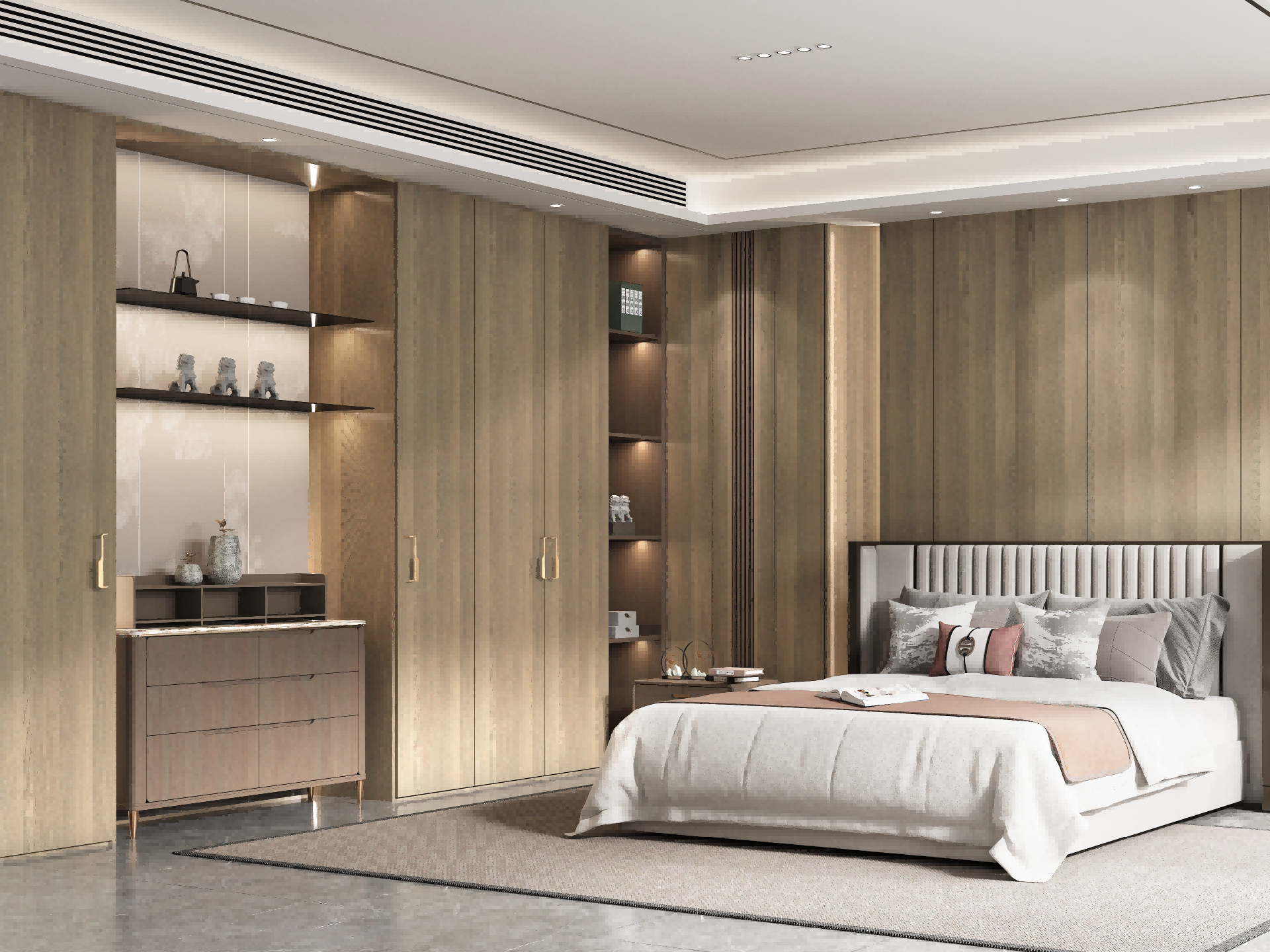
Sliding doors save the swing clearance, which matters in compact apartments, but you can only open one side at a time and the track collects dust. Hinged doors open the full width, seal better against dust and humidity, and allow mirrors or panelling on the inside. In humid markets hinged doors with proper seals are usually the better long-term choice; sliding wins purely on space.
Pending fact review
62What kitchen cabinet modules and sizes do you offer?
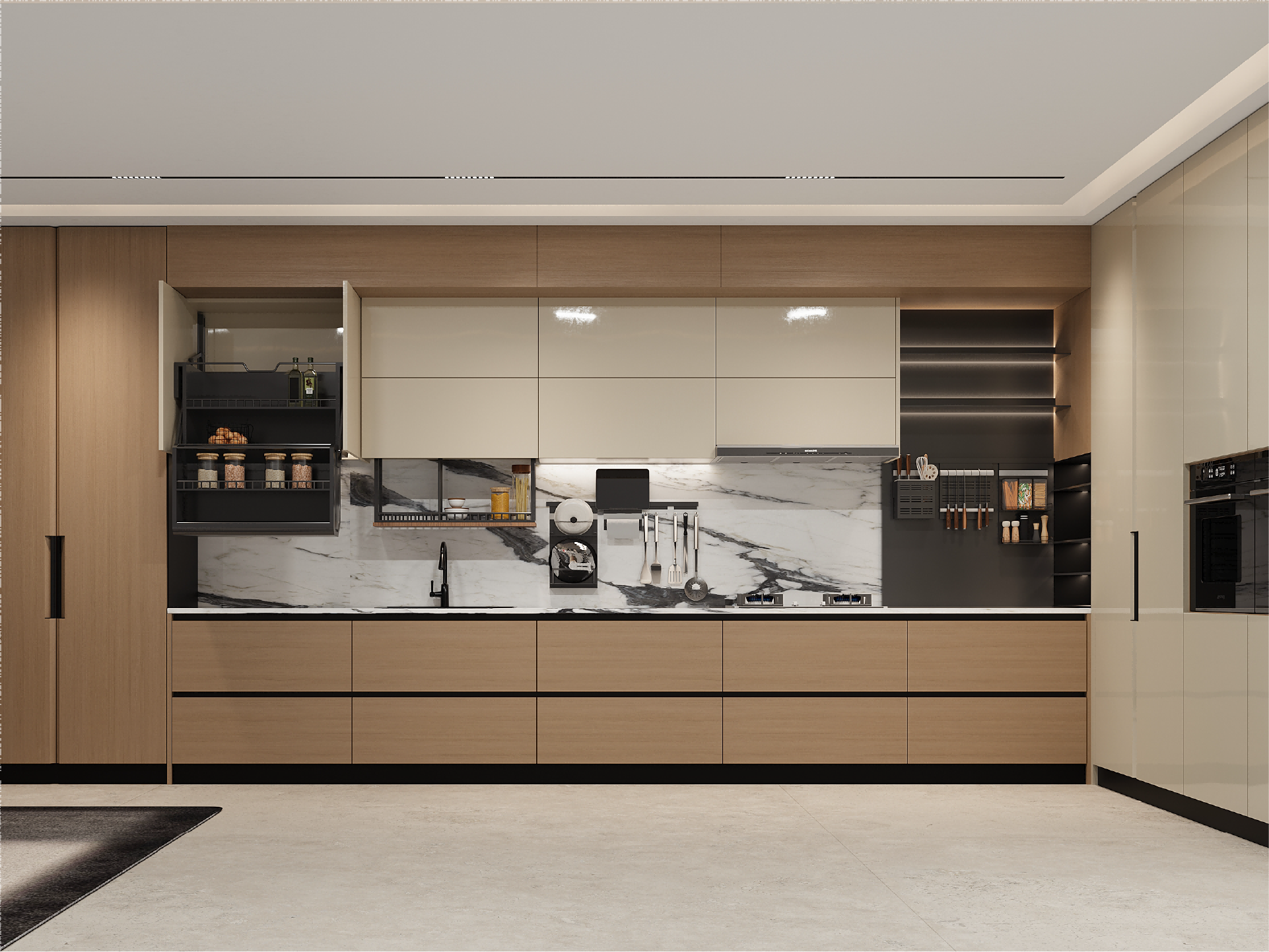
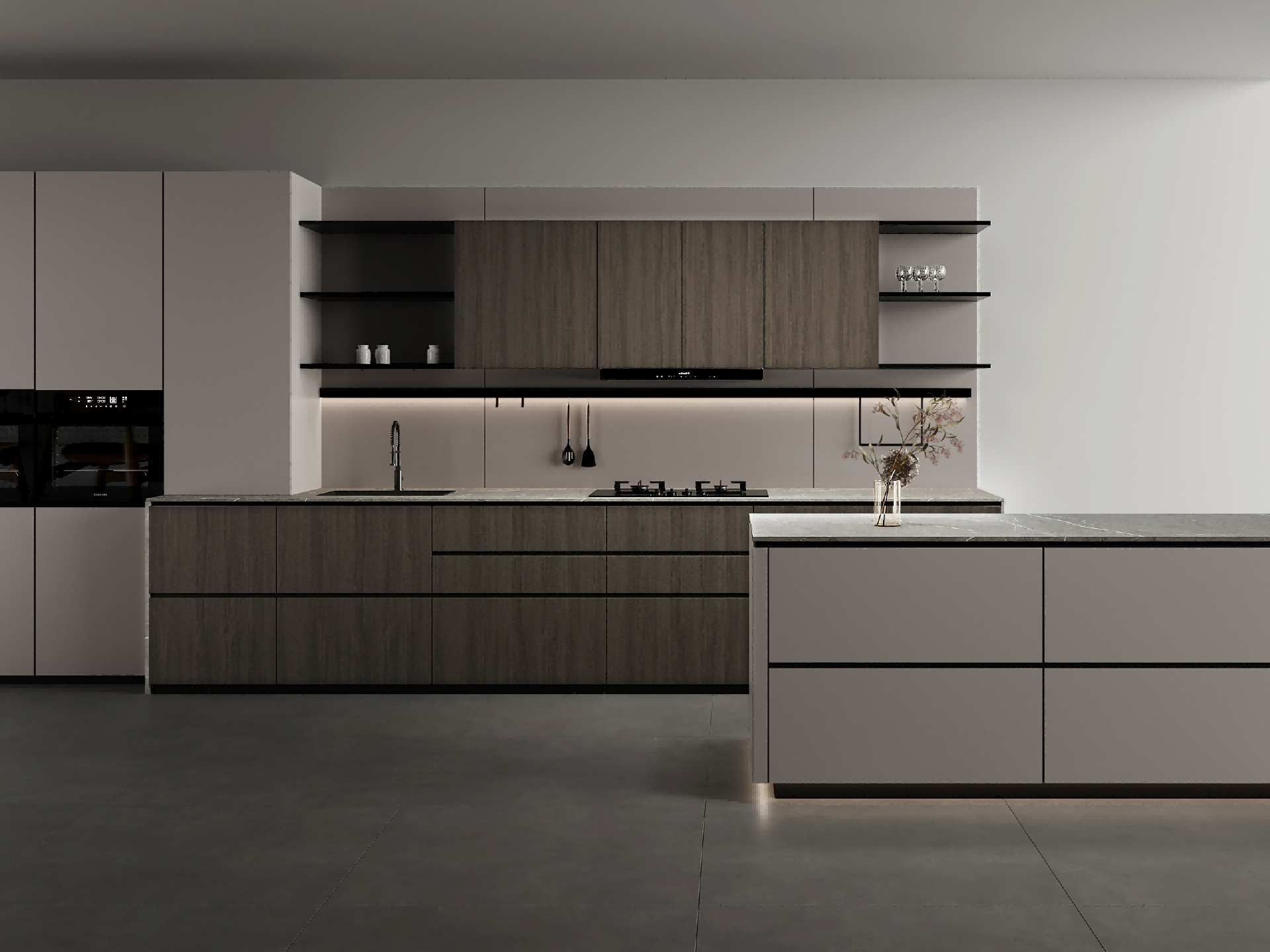
We build base cabinets (typically 560–600 mm deep, 850–900 mm high plus worktop), wall cabinets (300–350 mm deep), tall pantry and oven housings, and islands. widths are fully custom rather than fixed modules, which means we can fill an entire wall with no filler strips. Send your kitchen dimensions and appliance list and we will return a full layout.
Pending fact review
63Can cabinets be built to fit sloped ceilings, beams and awkward corners?
Yes — this is the main reason to choose custom over modular furniture. We cut carcasses and doors to scribe against sloping ceilings, exposed beams, pipe ducts and out-of-square walls, and design corner units with carousel or Le Mans fittings so dead corners become usable. Provide photos plus a dimensioned sketch of the awkward area and we will solve it in the drawing stage.
Pending fact review
64Which countertop materials can you supply with kitchen cabinets?
Common options are quartz, sintered stone, solid surface, laminate and stainless steel, plus natural stone where the project calls for it. In humid and coastal markets quartz and sintered stone are the safest because they are non-porous and resist staining and mould. Countertops are usually sourced and templated locally; we supply the cabinets pre-drilled to the final template.
Pending fact review
65Are your kitchen cabinets moisture-resistant enough for a humid tropical kitchen?
For Southeast Asian kitchens we recommend moisture-resistant board or plywood cores, PUR or laser edge banding on every panel, sealed cut-outs around sink and pipe penetrations, and aluminium or stainless plinths instead of particleboard. Ventilation and a properly sealed sink base matter as much as the board. Standard melamine particleboard without sealed edges is what fails in wet kitchens.
Pending fact review
66Do you make bathroom vanities that resist water and humidity?
Yes. Bathroom vanities use moisture-resistant or WPC board, fully sealed edges, waterproof drawerboxes or aluminium frames, and stainless or coated hardware. Wall-hung designs with a sealed plinth gap are the most robust in wet rooms. Tell us whether the room is a guest bathroom with a shower or a family bathroom, since the exposure level changes the specification.
Pending fact review
67Can you add lighting, mirrors, glass doors and pull-out organisers?
Yes. Available accessories include LED profile lighting with sensor switches, integrated or framed mirrors, aluminium-framed glass doors, pull-out pantry baskets, corner fittings, trouser and tie racks, jewellery trays, soft-close drawer organisers, and lift-up or pocket door systems for appliances. Accessories are specified on the shop drawing so wiring and cut-outs are prepared in the factory, not on site.
Pending fact review
68How tall can a wardrobe or cabinet door be before it warps?
Tall doors over about 1.8–2.0 m can bow over time, especially wide panels in board materials. The standard solutions are a door straightener (an aluminium profile set into the back), a stiffer substrate such as plywood or a framed door, or splitting into two doors. For full-height wardrobes in villas we normally specify straighteners as standard rather than as an upgrade.
Pending fact review
69Do you design and build walk-in closets and dressing rooms?
Yes. We design full dressing rooms including island units with glass tops, open shelving, backlit wardrobe sections, full-height mirrors and seating. Layout is planned around circulation — a minimum 900–1000 mm aisle between facing units — and around your storage mix. For villas in the Gulf and North America, walk-in closets are often the highest-impact room in the whole package.
Pending fact review
70Can you supply a complete furniture package for an apartment or villa?
Yes. A full package covers kitchen, wardrobes, bathroom vanities, interior doors, wall panelling and storage cabinets for every room, produced in one schedule and shipped in one or more containers labelled by unit. This gives developers and villa owners one point of responsibility, one design language and a far lower coordination cost than managing six separate suppliers.
Pending fact review
71What board materials do you use: particleboard, MDF, plywood or solid wood?
We work with particleboard (chipboard), MDF, plywood, OSB and solid wood, each for a different job. Carcasses are most often moisture-resistant particleboard or plywood; painted and profiled doors use MDF; plywood is specified where screw-holding, moisture or weight matters; solid wood is used for frames, feature panels and premium doors. The right choice depends on the room, not on a general ranking.
Pending fact review
72What formaldehyde emission grade are your boards?
Boards are available to E0 and ENF (GB/T 39600), CARB Phase 2 / EPA TSCA Title VI for the US market, and Japanese F★★★★ (F4 star) for Japan and Korea. F4 star uses a stricter test — larger sample area, 65 °C, unsealed edges — so it is often required for nurseries and Japanese projects. We supply the test report matching your destination market with every quotation.
Pending fact review
73How thick are your cabinet boards, and what about the back panel?
Carcass panels are 18 mm as standard, with 16 mm available where budget is tight. Back panels are the detail that separates a durable cabinet from a weak one: 5 mm backs flex and crack against the wall, so we recommend 9 mm as a minimum and 18 mm where the cabinet is load-bearing or wall-hung. Always confirm back panel thickness in writing — it is a common silent downgrade.
Pending fact review
74What edge banding do you use — EVA, PUR or laser?
EVA is the entry option and can open at the glue line under heat and humidity. PUR is moisture- and heat-resistant and is our standard recommendation. Laser edge banding fuses the band with no glue line at all, giving the cleanest look and best moisture seal at a premium. In humid and tropical markets, edge banding quality matters more than the board grade itself.
Pending fact review
75What surface finishes are available — melamine, lacquer, veneer, PET or acrylic?
Melamine and laminate are the durable, cost-effective defaults; lacquer (painted MDF) gives any colour with a smooth matte or gloss surface; wood veneer gives real grain for premium projects; PET and acrylic give a high-gloss, fingerprint-resistant modern look; and UV-cured panels give maximum scratch resistance for rentals and hotels. We will recommend by room, traffic and budget.
Pending fact review
Still Have Questions?
Our overseas business team is ready to help with product details, customization options and project requirements.
CONTÁCTENOS


 Facebook
 Twitter
 LinkedIn
